
Introduction
Biomechanics of the human musculoskeletal system is a scientific discipline that applies the principles of mechanics to understand the structure, function, and movement of the human body. By integrating knowledge from anatomy, physiology, physics, and engineering, musculoskeletal biomechanics provides a quantitative framework for analyzing how forces act on biological tissues and how these tissues respond during static postures and dynamic activities. This field plays a fundamental role in explaining normal human movement, optimizing performance, and understanding pathological conditions.
Organization of the Musculoskeletal System
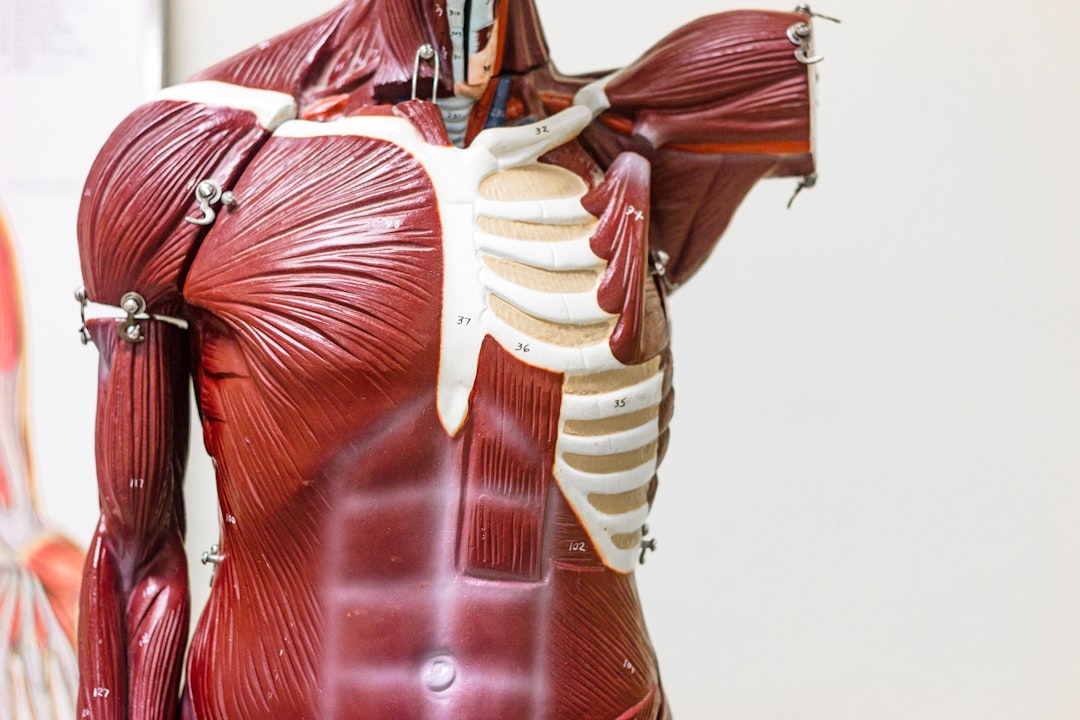
The human musculoskeletal system consists of bones, joints, muscles, tendons, ligaments, and other connective tissues that collectively enable movement and provide structural stability. Bones form the rigid framework of the body and serve as attachment points for muscles. Joints connect adjacent bones and allow relative motion while maintaining alignment and load transfer. Muscles generate force through contraction, tendons transmit this force to bones, and ligaments guide and restrict joint motion to maintain mechanical integrity.
From a biomechanical perspective, the musculoskeletal system operates as an integrated mechanical system in which structure and function are inseparable. Alterations in one component inevitably influence the mechanical behavior of the entire system.
Skeletal Biomechanics
Skeletal biomechanics focuses on the mechanical properties and functional behavior of bone tissue. Bones are subjected to a variety of mechanical loads, including compression, tension, bending, shear, and torsion. Their ability to withstand these forces depends on factors such as geometry, density, material composition, and internal microstructure.
Bone is a dynamic tissue that adapts to mechanical loading through remodeling processes. According to biomechanical principles, appropriate loading stimulates bone formation and strengthens structural integrity, whereas reduced loading leads to bone loss. Understanding skeletal biomechanics is essential for analyzing fracture risk, skeletal alignment, and load transfer during movement.
Joint Biomechanics
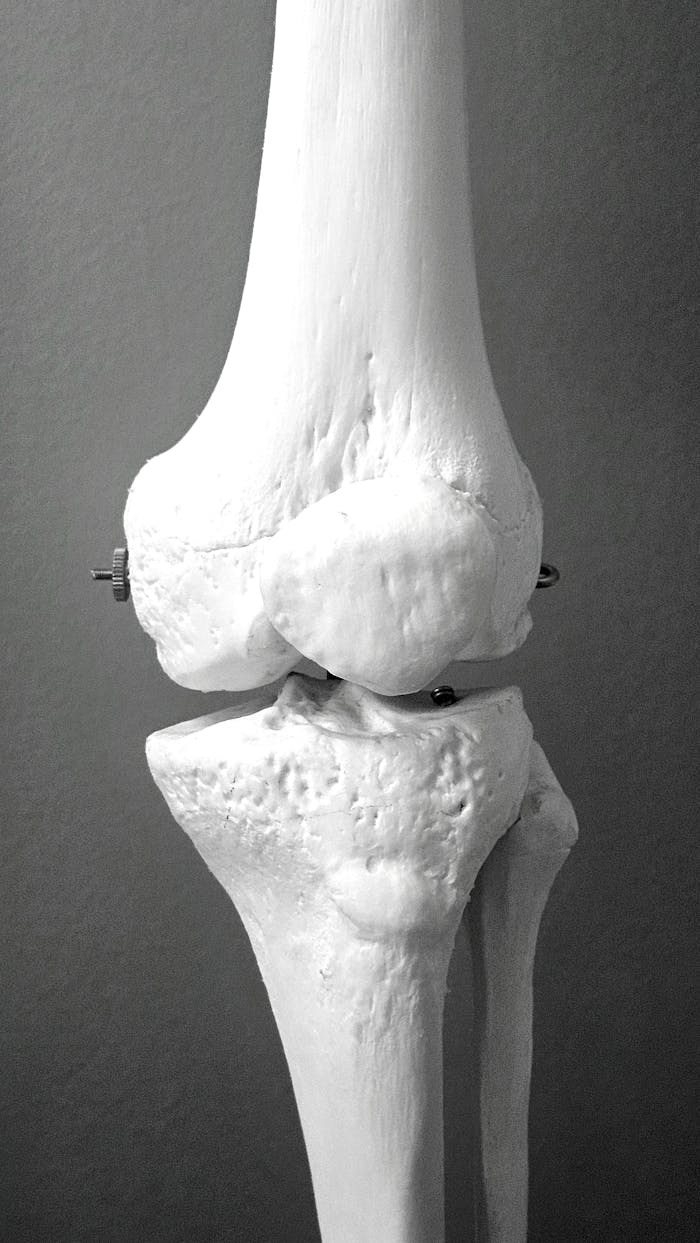
Joint biomechanics examines how articulating surfaces move relative to one another and how forces are transmitted across joints. Joints must simultaneously provide mobility and stability, a balance that is achieved through joint geometry, cartilage properties, ligament constraints, and muscle forces.
Joint motion can be described using kinematic concepts such as degrees of freedom, axes of rotation, and range of motion. In contrast, kinetic analysis focuses on joint reaction forces, moments, and contact stresses. Abnormal joint loading or altered mechanics can lead to degenerative changes and impaired function, highlighting the importance of joint biomechanics in maintaining long-term musculoskeletal health.
Muscle Biomechanics
Muscle biomechanics investigates the mechanisms by which muscles generate force and produce movement. Muscle force production is influenced by muscle length, contraction velocity, activation level, and architectural characteristics such as fiber orientation and cross-sectional area.
Different types of muscle contractions—concentric, eccentric, and isometric—play distinct roles in movement execution and control. Muscles act across joints to generate torque, and the effectiveness of this torque depends on the muscle’s moment arm. Coordinated activation of multiple muscles is required to achieve smooth, efficient, and controlled movement.
Biomechanics of Human Movement
Human movement is the result of complex interactions between skeletal structures, joint mechanics, muscle forces, and neural control. Biomechanical analysis of movement is commonly divided into kinematics and kinetics. Kinematics describes motion in terms of position, velocity, and acceleration without regard to forces, whereas kinetics examines the forces and moments responsible for that motion.
Activities such as walking, running, jumping, and lifting involve coordinated motion across multiple joints. Biomechanical analysis allows for the evaluation of movement efficiency, load distribution, and mechanical stress on tissues. Efficient movement patterns reduce energy expenditure and minimize injury risk.
Applications of Musculoskeletal Biomechanics
Musculoskeletal biomechanics has wide-ranging applications in sports science, clinical rehabilitation, orthopedics, ergonomics, and biomedical engineering. It informs the design of training programs, assistive devices, prosthetics, and rehabilitation interventions. By providing objective measures of movement and loading, biomechanics supports evidence-based decision-making in both research and clinical practice.
Conclusion
The biomechanics of the human musculoskeletal system provides a comprehensive framework for understanding how biological structures interact with mechanical forces to produce movement. By linking anatomy with mechanical function, this field offers critical insights into human motion, performance, and musculoskeletal health.
 Your Resource for Scientific Research